Lift and Suspension for the Trail
Suspension is the heart of a Jeep build. A lift adds clearance for obstacles and room for bigger tires, which is what makes a Jeep so capable off-road. Jeeps use solid axles front and rear, which is a big part of why they build up so well and flex so far on the trail.
There is an important detail here that a lot of shops get wrong. When you go to a taller lift, it changes your Jeep's suspension and steering geometry. Done right, with the correct control arms, track bar, and a proper alignment, your Jeep drives straight and smooth. Done wrong, you can end up with poor handling or the dreaded death wobble. We set up Jeep suspension the right way so your lift performs on the trail and drives well on the road. Learn more about lift kit installation
and the leveling kit versus lift kit decision.
Wheels and Tires
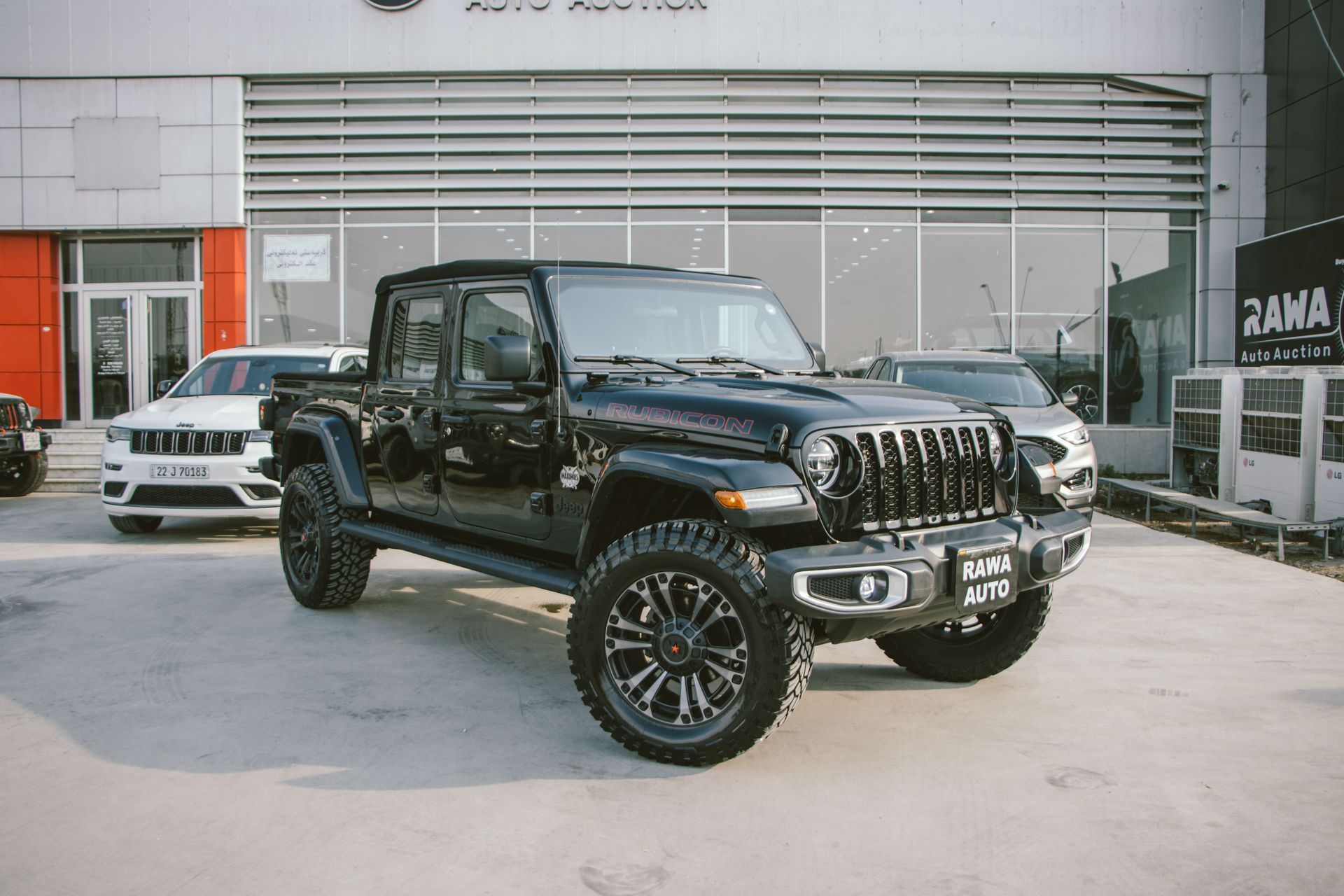
Tires change a Jeep more than any other upgrade. Bigger tires mean more grip and clearance on the trail, and they define the look. The trick is matching the tire to your lift so it clears without rubbing. On a Wrangler, a small lift commonly clears a 33-inch tire, a mid-size lift opens the door to 35s, and 37s take a taller lift and usually some other changes.
One thing to plan for: when you jump to 35s or 37s, your Jeep can feel sluggish and lose fuel economy, because the bigger tire changes your effective gearing. Re-gearing your axles brings the power and drivability back, and we can tell you whether your build needs it. See our guides on choosing the right tires
and choosing wheels for your truck or Jeep.
Armor: Bumpers, Rock Sliders, and Skid Plates
If you take your Jeep off the pavement, armor is what keeps trail damage from becoming an expensive repair. Steel bumpers protect the front and rear and give you a mounting point for a winch and lights. Rock sliders protect the rocker panels and double as a step. Skid plates protect the vulnerable parts underneath, like your oil pan, transmission, and fuel tank, from rocks and stumps.
Armor is where a real Jeep build separates from a mall crawler. For a Jeep that sees actual trails, this protection is not optional. Read more about truck and Jeep bumpers
and skid plates and underbody armor.
Winches and Recovery Gear
When you wheel a Jeep, getting stuck is not a matter of if but when. A winch is the centerpiece of any recovery setup, letting you pull yourself or a buddy free. But a winch is only part of it. The right recovery gear, including straps, shackles, and a way to anchor safely, rounds out the kit. We install winches and set up recovery gear so it works when the trail gets tough. Learn more about choosing a winch
and recovery gear.
Lighting
Trails and Iowa gravel roads have no streetlights, and winter sunsets come early. A LED light bar and pod lights light up the trail, the ditches, and the road ahead. The key is clean, correct wiring that holds up to mud, water, and weather. We wire Jeep lighting so it works off-road and stays street-legal. Learn more about LED light bar installation
and how to install LED lights on a Jeep.
Fender Flares and Exterior
Once you run bigger tires, they often stick out past your factory fenders. Fender flares cover that wider tire, keep mud and rock spray off you and other drivers, and finish the look of a lifted Jeep. Flat or high-clearance flares also give bigger tires more room to move on the trail. We install flares that fit clean and hold up to Iowa weather. Read more about fender flares,
and before winter, check out the top accessories to prep your Jeep for Iowa winter trails.
We Build Wranglers and Gladiators
The Wrangler is the classic Jeep build, trail-capable and endlessly customizable. The Gladiator adds a real truck bed to that same Jeep DNA, so it hauls and tows while still hitting the trail. The Gladiator's longer wheelbase means the middle of the truck needs protection too, since it can catch on obstacles a shorter Jeep clears, and we set up armor and suspension to match. Whichever you drive, we confirm what fits your exact year and build it for how you use it.